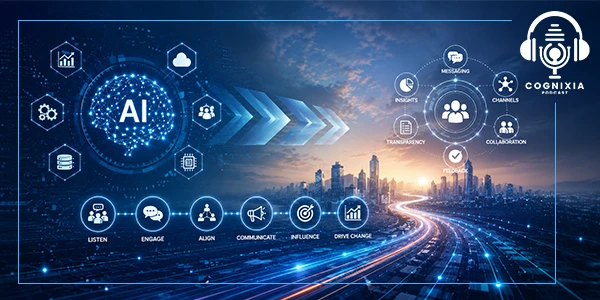

Cloud adoption is entering a new era. As organizations prepare for 2025, the conversation is no longer about migration or basic optimization. Instead, enterprises are focusing on Cloud 3.0 — a phase where cloud, data, AI, and business outcomes are tightly integrated.
This blog explores how Cloud 3.0 is reshaping enterprise data strategies and what organizations must do to stay competitive.
Understanding Cloud 3.0
Cloud 3.0 marks the evolution of cloud platforms into intelligent, AI-ready business ecosystems.
Unlike earlier phases, Cloud 3.0 emphasizes:
- Real-time data processing
- AI-native architectures
- Platform engineering
- Cost intelligence and governance
- Security-by-design
Cloud is no longer just IT infrastructure — it is the backbone of digital transformation.
Data Strategy Takes Center Stage
In Cloud 3.0, data becomes the foundation of enterprise intelligence.
Key data strategy shifts include:
- Adoption of unified data platforms
- Streaming and event-driven architectures
- Data mesh models for scalability
- Strong metadata management
- AI-ready, high-quality data pipelines
Enterprises are designing data ecosystems that support advanced analytics and AI-driven decision-making.
AI-Driven Cloud Architectures
AI workloads are accelerating cloud modernization.
Enterprises are now:
- Designing cloud platforms for AI training and inference
- Embedding analytics into operational systems
- Using AI for data observability and optimization
- Automating insights delivery across business units
Cloud and AI are no longer separate strategies — they evolve together.
FinOps Becomes a Strategic Capability
Cloud 3.0 introduces advanced FinOps practices that align cloud spending with business value.
Organizations focus on:
- Cost transparency and accountability
- AI-driven usage optimization
- Cross-functional cost ownership
- Business-aligned cloud KPIs
This shift ensures cloud investments deliver measurable outcomes.
[cognixia_posthumb]
Security and Compliance in Cloud 3.0
Security is integral to modern cloud architectures.
Key focus areas include:
- Zero Trust frameworks
- Identity-first access control
- Secure data pipelines
- Automated compliance and monitoring
- Cloud-native threat detection
Security is built into cloud design rather than added later.
The Cloud and Data Talent Imperative
The biggest challenge in Cloud 3.0 adoption is talent readiness.
Organizations require skills in:
- Cloud engineering and architecture
- Data engineering and analytics
- AI and MLOps
- Platform engineering
- Cloud security and governance
This makes continuous upskilling a strategic priority.
How Cognixia Enables Cloud 3.0 Readiness
Cognixia partners with enterprises to build future-ready cloud and data capabilities through:
- Cloud and platform engineering programs
- Data engineering and analytics upskilling
- AI and MLOps enablement
- Cloud security and FinOps training
- Hands-on, role-based learning pathways
These programs help organizations accelerate Cloud 3.0 adoption with confidence.
Conclusion
Cloud 3.0 represents a fundamental shift in how enterprises use cloud and data to drive innovation and growth. Organizations that align technology, data, security, and talent strategies will unlock the full potential of intelligent cloud platforms in 2025.
Cognixia continues to support enterprises on this journey by building cloud-ready, data-driven, and AI-enabled workforces.