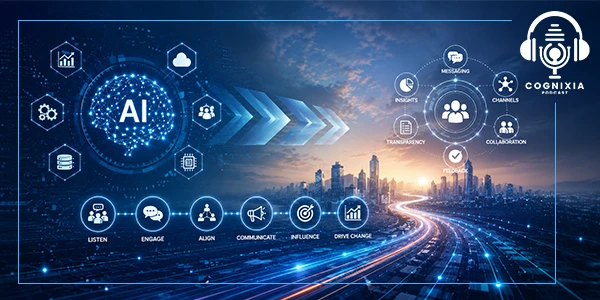

As organizations accelerate digital transformation, generative AI for enterprises is becoming a critical enabler of innovation, efficiency, and scalability. From content generation to workflow automation, enterprises are rapidly exploring how to operationalize generative AI across business functions. However, moving from experimentation to enterprise-wide implementation requires structured strategies, governance, and workforce readiness.
Why Generative AI for Enterprises Is Gaining Momentum
Generative AI has moved beyond proof-of-concept stages and is now being integrated into core enterprise workflows. Organizations are leveraging generative AI to automate repetitive tasks, enhance decision-making, and improve customer experiences.
Key drivers behind enterprise generative AI adoption include:
- Increased demand for automation and operational efficiency
- Need for faster content and solution generation
- Scalability across multiple business functions
- Competitive advantage through AI-driven innovation
Enterprises that successfully adopt generative AI can significantly reduce time-to-market while improving productivity.
Key Components of AI Workflow Automation
To effectively implement AI workflow automation, organizations must integrate generative AI into structured workflows rather than using it in isolation.
Core components include:
- Integration of generative AI tools with existing enterprise systems
- Automation of repetitive and data-driven tasks
- Real-time data processing and content generation
- Continuous monitoring and optimization of AI outputs
Organizations can accelerate adoption by building strong AI capabilities across teams.
[cognixia_posthumb]
Explore Generative AI Programs
Scaling Generative AI Use Cases Across the Enterprise
Scaling generative AI for enterprises requires a shift from isolated pilots to enterprise-wide deployment. This involves identifying high-impact use cases and standardizing implementation strategies.
Common enterprise use cases include:
- Automated content creation for marketing and communications
- AI-driven customer support and chatbots
- Code generation and software development acceleration
- Data analysis and report generation
By scaling these use cases, organizations can drive measurable business outcomes and operational efficiency.
Enabling Applied Generative AI in Business
The success of applied generative AI in business depends on aligning technology with workforce capabilities and organizational goals.
Key enablers include:
- Workforce upskilling in AI tools and platforms
- Establishing governance frameworks for AI usage
- Encouraging cross-functional collaboration
- Building a culture of continuous innovation
Enterprises investing in structured learning and transformation programs can accelerate AI adoption effectively.
Explore Enterprise Upskilling Programs
Closing Thoughts
Operationalizing generative AI for enterprises is no longer optional, it is a strategic necessity for organizations aiming to scale innovation and efficiency. By integrating AI into workflows, building workforce capabilities, and focusing on scalable use cases, enterprises can unlock the full potential of generative AI and drive long-term business value.