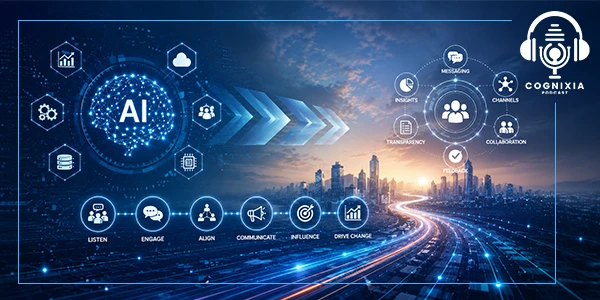

As Global Capability Centers evolve into innovation-driven hubs, organizations are increasingly focusing on optimizing performance through a structured GCC productivity strategy. With the integration of artificial intelligence, enterprises are redefining workforce models to enhance efficiency, scalability, and business impact. AI-led workforce models are enabling GCCs to move beyond traditional delivery functions and become strategic drivers of enterprise value.
Why GCC Productivity Strategy Is Critical in the AI Era
The shift toward digital transformation has increased the pressure on GCCs to deliver higher value with greater efficiency. A well-defined GCC productivity strategy ensures that organizations can scale operations while maintaining performance and innovation.
Key drivers include:
- Increasing demand for automation and efficiency
- Need to scale operations without proportional cost increases
- Growing complexity of digital and AI-driven initiatives
- Expectation for GCCs to contribute to business innovation
Organizations adopting AI-driven strategies can significantly improve productivity and operational outcomes.
How AI-Led Workforce Models Transform GCC Operations
AI-led workforce models are redefining how work is executed within GCCs. By integrating AI into workflows, organizations can automate repetitive tasks, enhance decision-making, and improve overall efficiency.
Core elements of AI-led workforce models include:
- Automation of routine and repetitive processes
- AI-assisted decision-making and analytics
- Integration of AI tools into enterprise systems
- Continuous performance monitoring and optimization
Organizations can accelerate AI adoption through structured learning initiatives.
Explore Generative AI Programs
Enhancing GCC Workforce Productivity with AI Integration
Improving GCC workforce productivity requires a combination of technology, process optimization, and talent development. AI enables organizations to streamline workflows and reduce manual effort.
Key focus areas include:
- Optimizing workflows through AI-driven automation
- Reducing turnaround time for critical processes
- Enhancing collaboration through intelligent tools
- Leveraging data insights for performance improvement
These initiatives help organizations achieve measurable gains in efficiency and output.
Building Intelligent Workforce Models for Scalable Performance
To scale performance effectively, organizations must develop intelligent workforce models that combine human expertise with AI capabilities.
Best practices include:
- Aligning workforce strategy with business goals
- Upskilling employees in AI and digital technologies
- Creating hybrid human-AI collaboration models
- Implementing governance frameworks for AI usage
Enterprises can accelerate transformation through strategic workforce initiatives.
[cognixia_posthumb]
Explore Workforce Transformation Consulting
Closing Thoughts
A strong GCC productivity strategy powered by AI-led workforce models enables organizations to drive efficiency, innovation, and scalable growth. By integrating AI into operations and investing in workforce capabilities, GCCs can unlock new levels of productivity and become key contributors to enterprise success.